
Flu Shot!
HEALTH
Don’t throw away your (flu) shot!
by Sophie Troyer
During the past few years, the flu season started early, in October, and was more severe earlier in the season than it has been in previous years.1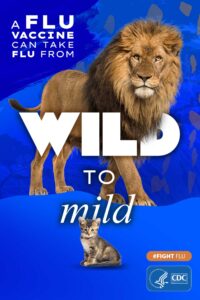
According to the CDC, during the 2022-2023 flu season, there were between 26-50 million cases of the flu, leading to between 290,000 to 670,000 hospitalizations, and 17,000 to 98,000 deaths.2
Based on data for this flu season, the types of flu circulating are those that can hit children (0-4 years) and young adults (5-24 years) harder than usual, and we are seeing this reflected in doctor’s visits currently.3,4 One of the types of flu that is circulating has previously caused the most hospitalizations in all age groups.5
This year, the vaccines contain four types of viruses. These vaccines seem well-matched to the main circulating strains this year.6
Who should get vaccinated? Everyone! Only children under 6 months are too young for vaccination. Vaccination is especially recommended for the following individuals:7
- Age 50+
- Chronic conditions: pulmonary, cardiovascular, renal, hepatic, neurologic, hematologic, or metabolic disorders
- Immunosuppressed
- Pregnant
- Children
- Residents of long-term care facilities
- Those with obesity
- Contacts of those at risk (the above)
- Healthcare personnel
Your physician can address specific concerns such as allergies or where to get the shot.
Common myths and Q&A—
Myth #1: I got the flu shot, but still got the flu and had symptoms. It doesn’t matter if I get the shot.
You still protected yourself from worse illness and hospitalization. There’s no way to directly compare how you would fare without the flu shot to with the flu shot, but since you have primed your immune system against the flu, you can imagine your symptoms would have been much worse.
Myth #2: The flu shot gave me the flu.
When you get a flu shot, you might feel unwell for about a day, but that is a sign that your immune system is creating a protective response. These symptoms will be significantly milder than the flu would be.
It is also possible that you caught the flu prior to the flu shot but developed symptoms later.
Myth #3: I have a great immune system. Do I really need the flu shot?
A flu vaccine can help protect vulnerable people around you. You can spread the flu even before you show symptoms. Since flu shots help your immune system to better fight the virus, you are less likely to spread it, and will have a shorter and milder case.
Common Question #1: I think I already got the flu this year, is there any point to getting a flu shot?
It is always possible to get the flu multiple times within a season because there are different viruses circulating. So, even if you already got the flu, you should still get a flu shot to protect yourself from other flu viruses.
 Common Question #2: When should I get the vaccine?
It is recommended to get your flu shot by the end of October.
Resources:
- https://gis.cdc.gov/grasp/fluview/fluportaldashboard.html
- https://www.cdc.gov/flu/about/burden/preliminary-in-season-estimates.htm
- https://www.cdc.gov/flu/weekly/index.htm#ILIMap
- https://www.cdc.gov/mmwr/volumes/69/wr/mm6902e1.htm?s_cid=mm6902e1_w
- https://www.ncbi.nlm.nih.gov/pmc/articles/PMC10156635/
- https://www.cdc.gov/flu/season/faq-flu-season-2023-2024.htm
- https://www.cdc.gov/flu/prevent/whoshouldvax.htm
Image #1 source: CDC (https://www.cdc.gov/flu/images/resource-center/fightflu/lion-wild-to-mild-1000×1500-1.png)
Must include the following details: “Materials developed by CDC” – “Reference to specific commercial products, manufacturers, companies, or trademarks does not constitute its endorsement or recommendation by the U.S. Government, Department of Health and Human Services, or Centers for Disease Control and Prevention”. “The material is otherwise available on the CDC website for no charge”
Image #2 source: drawing of pro-vax Rosie the Riveter by Sophie Troyer
Sophie Troyer is from Goshen, Indiana. She received a Degree in Biology and English with a minor in Spanish for the Medical Professions from University of North Carolina at Chapel Hill. She is currently attending University of Rochester School of Medicine and Dentistry as an MD-PhD student. Sophie is currently in her PhD years studying immunology. She is a member of the “LatinX Health Pathway.” She is interested in advocacy and accessibility of medicine and medical knowledge, in addition to her purely medical/scientific pursuits.