
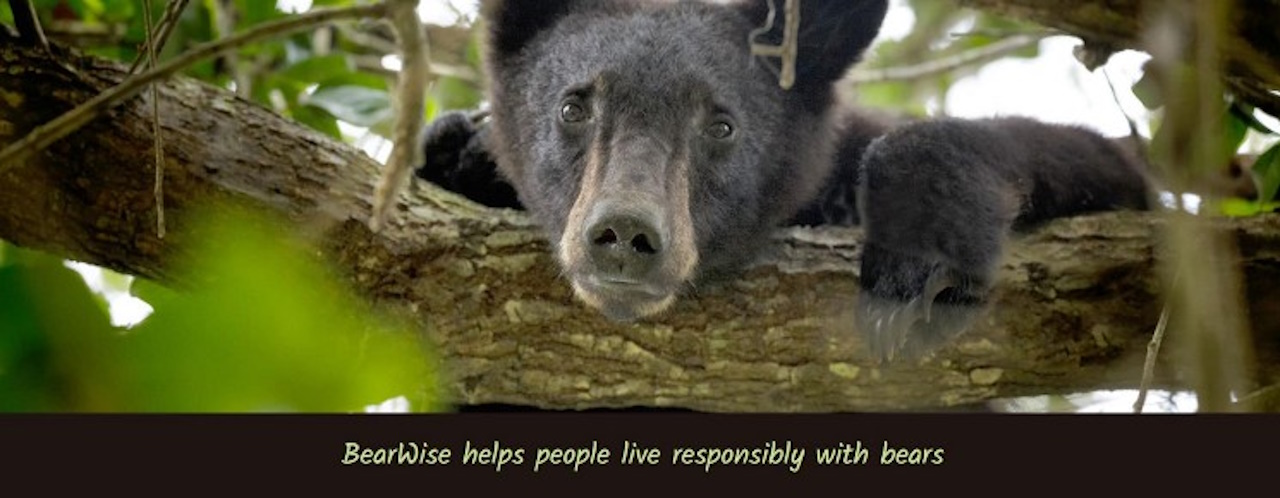
You Might See A Bear In Your Back Yard
by Rob English
 Usually If we see a big, wild animal in Central New York it’s likely to be a deer. But Black bears are occasionally being cited in our suburban space. Bearwise (www.BearWise.org) explains:
Most bears spotted in unlikely or unusual places in early summer fall into three categories:
Juvenile male bears that denned up with their moms last winter and got booted out this spring. No matter how big and furry they look, these bears are about 18 months old and are just trying to figure out how to live on their own. Juvenile males need to disperse and find a place to call home where they can find food, shelter and eventually a mate. Juvenile female bears, however, are often allowed to move in next door to their moms, so most wandering bears are males. These young bears are
often lonely and lack the fully developed survival skills of an adult bear. They are also hungry and inquisitive and will check out anything that seems as if it might be a source of food. Like human teenagers, they are at a very impressionable stage of life. If they quickly discover that
human places should be avoided, they will be forced to learn to support themselves as wild bears. If they find the backyard pickings are easy, they start down a road that is often a dead end for them.
Adult male bears are roaming far and wide in search of a mate. Both male and female bears may mate several times in early summer; in fact, it’s not unusual for cubs from a single litter to each have a different father. But female bears rarely leave their home ranges; for the good of the gene pool, they let the males come find them. So adult male bears may travel long distances through various females’ home ranges.
New moms have lots of mouths to feed. Mother bears may have between one and six cubs depending on
her for their survival. Natural spring and early summer food sources such as grasses and developing plants are just not as calorie-dense and nutritious as the nuts and fruits that ripen later in the year. So mother bears often need to travel further from their dens looking for food. Cubs take after their parents in several ways: they are super-smart, learn quickly and are very adaptable. So
if mom teaches them to raid the garbage or bat down bird feeders or sends them in through pet doors to see what’s in the kitchen, it creates a whole new generation of problems for people and bears.
Be extra-vigilant during this extra-critical time. Follow the At-Home BearWise Basics and use the BearWise At-Home Checklist make sure there’s nothing around your property or home that will attract bears. Don’t approach bears. Don’t feed bears. Don’t call all your neighbors to come watch. If the bear is headed to a safe space (for bears), just leave it alone. If you’re worried it’s at risk because it’s wandering through a densely populated area, call your state wildlife agency. And then make sure you and your neighbors have no unsecured food sources, pet food, birdseed or other attractants that would tempt it to hang around.
WHY EARLY SUMMER BRINGS MORE BEAR SIGHTINGS
Courtesy of BearWise® | www.BearWise.org
Rob English is a member of People for Animal Rights, a grassroots organization in Central New York. Contact People for Animal Rights
PO Box # 401,
Cleveland, NY 13042
peopleforanimalrightsofcny@gmail.com
Photo of Grizzly bear by Janko Ferlic from pexel.com
Bear with WISE Bear Message taken from WISE Bear website
